It’s dinner time. You pull out your recipe for a family favorite and start gathering the ingredients. You grab the salt and pepper and start looking through the spice cabinet for the oregano, paprika and cumin, all easily accessible and common spices used daily by millions around the world. But where did these spices come from and how are they grown?
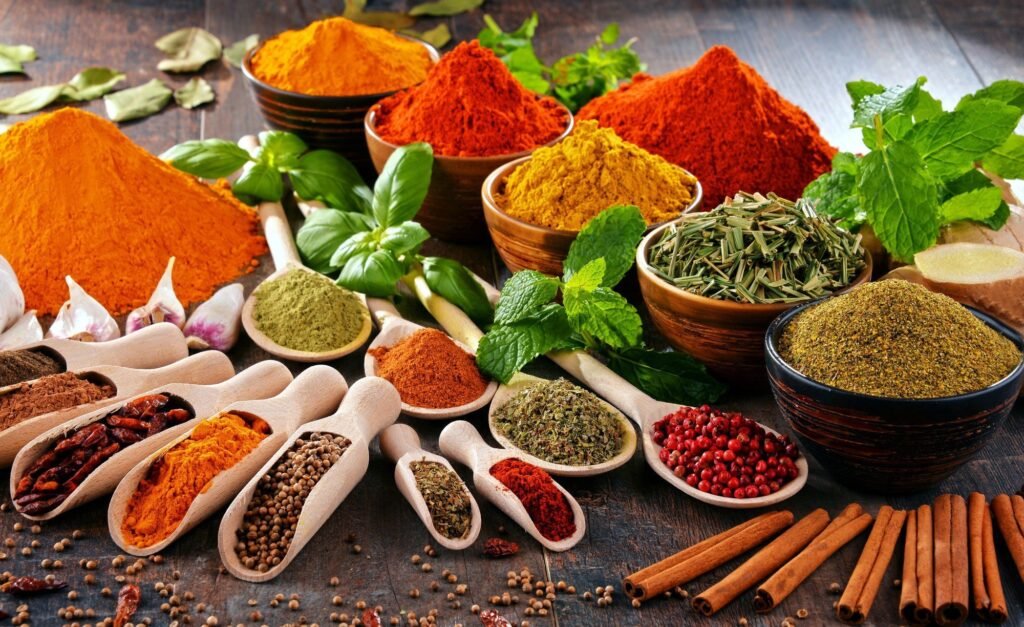
The most common spices used worldwide, according to Food&Wine magazine, include: black pepper, garlic powder, crushed red pepper, cumin, paprika, coriander seeds, turmeric, cinnamon and ginger.
Black pepper makes its way to our spice shelf via Vietnam, Brazil and Indonesia where the climate is hot, humid and rainy. The peppercorns grow on a perennial climbing vine that can reach up to 30 feet tall and can take 3-4 years to reach maturity. Harvesting is by workers who handpick the pepper spikes from the vines when the tiny berry clusters turn from green to yellow, which means they have reached the peak of essential oil content. The berries are then sun-dried until they shrivel and turn black. Black pepper is one of the most commonly traded spices in the world and has a long history dating well before the Roman Empire where it was a staple in Indian cooking.
Cumin, which comes in the form of seeds or ground powder, is the world’s most consumed spice. It is the star ingredient of taco seasoning, chile powder, curry powder and bbq rubs used by Americans daily, but its journey to the American dinner table has its early role in Greek and Roman times where a shaker of cumin was kept on the table like salt and pepper today. It was even used in embalming compounds by the ancient Egyptians. Cumin has been traded over the years to every continent. It comes from an almost willowy green plant. When the plant turns golden, it is harvested by pulling out the entire plant and laid on tarps to dry. Then the plants are put through a threshing machine that shakes the seeds loose. India produces around 70% of the world’s production of cumin. Syria, Turkey, UAE and Iran produce the remainder.

Paprika gets its bright red color from red peppers, Capsicum annuum, to be exact. Paprika is produced around the world but the two best-known producers are Hungary and Spain. The spice is the product of red pepper plants that grow 2-3 feet tall producing sweet, mild or even pungent red peppers that turn bright red at maturity. The peppers are picked, dried and ground into the powder. Hungary’s best-known dishes, such as goulash and stew, all have a paprika base and in Hungary, the customary salt and pepper shakers are usually side by side with a paprika shaker. The milder, sweet paprika is made of the fruit of the pepper with the seeds removed. The hotter variety includes seeds and stalks.
Did you know coriander and cilantro come from the same plant? In the U.S., cilantro refers to the fresh green plant leaves while the spice coriander refers to the dried seeds of the same plant. Once again, India is the star producer but Morocco, Russia and Eastern Europe and parts of the Mediterranean also produce the spice and in some areas, the plant grows wild. Coriander’s history dates back thousands of years. As with cumin, the coriander plant is cut and dried in bundles and then the seeds are the product of threshing the plant sometimes in some regions by beating the plant bundles with sticks.
India is once again the main producer and exporter of one of the world’s most popular spices, turmeric. A product of the plant stem or rhizome, it is usually boiled, dried and ground into a deep orange-yellow powder that is a staple in many Asian cuisines, especially curries. Turmeric has a warm, pepper-like flavor and mustard-like aroma. Its history is diverse used as part of traditional medicines to its use as a food dye. The turmeric plant is a perennial that grows to approximately 3 feet tall. It has highly branched, yellow to orange cylindrical, very aromatic stems. Its color is used to give a yellow tone to some prepared mustards, canned chicken broths and other foods.
Cinnamon is not grown commercially in the United States, but imported from Southwest Asian countries where there is a warm, tropical climate. Most of the ground cinnamon and cinnamon sticks come from a spice called Cassia grown in Sumatra, Indonesia on small farms. It is harvested by hand from the inner bark of trees. After removing the outer bark by hand, the aromatic inner bark’s long, thin strips are extracted in tightly rolled cinnamon sticks. Those which are of uniform size are marketed and exported as cinnamon sticks. Others are ground into cinnamon powder sold around the world.
Ginger is in the same family as turmeric and cardamom. It is sometimes touted as having medicinal benefits for nausea, but mostly is a flavorful spice used in Indian cuisine and drinks including chai teas. In Western cuisine, ginger is used in sweet foods from ginger snaps to ginger ale. Most ginger is harvested from the underground stem of the plant, the rhizome, and thrives in tropical climates such as Southeast Asia, India, China and Nepal as well as the Caribbean. India produces over 2 million tons of ginger each year. Ginger is ready for harvest about 8-10 months after planting. The ginger roots are harvested without disturbing the roots.
So, next time you wander the spice shelves in the grocery stores, it’s good to know it takes a world to bring the flavors we love to our food.
